Showing posts with label Fuel Efficiency. Show all posts

Wednesday, November 7, 2012

Use Cruise Control Safely When Driving Long Distance

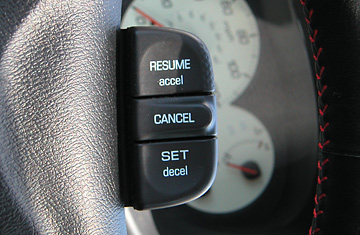
Cruise control has improved driver comfort and convenience. When activated, the system enables a driver to automatically maintain a minimum speed of 40 km/h or faster without having to keep a foot on the accelerator. It's an easy way to control speed on the highway, making the driver less likely to go over the speed limit inadvertently. Cruise control is also useful for long trips as it often results in higher fuel efficiency and reduces driver fatigue.

When used improperly, however, cruise control can cause accidents. Here are some safety tips on when and how to use the system.


Stay Alert!  Be ready to brake. Keep your feet flat. Scan the road ahead.
 Although controlling the vehicle’s speed on cruise control allows you to take your foot off the accelerator and rest it, you still control the steering and braking. Keep both feet flat on the driver’s side floor and ready for braking or maneuvering if you have to slow down or suddenly stop. Don’t lounge or curl your foot up underneath you as you drive.

Above all, it’s important to remain alert. A false sense of security could lead to inattention and an accident. Keep your mind on your driving; scan the road ahead for traffic, obstacles, and changing road conditions.

Not on winding, icy or slippery roads.  Not in heavy traffic.
Cruise control can be dangerous when the driver can’t drive safely at a steady speed.  Also, it should not be used while on winding roads or in heavy traffic. Cruise control may also be dangerous on slippery roads. The system is designed for perfect road conditions, but on slippery surfaces it can cause the vehicle to go into a skid.
This is, of course, a special concern during the winter months, when the roads are icy. The only way to avoid a skid in this environment is to immediately reduce power. But with cruise control engaged, the wheels continue spinning and the driver may lose control of the car.


Not during heavy summer rain.  Avoid slamming on the brakes.
It's not only a winter problem. Using cruise control during a heavy summer rain can cause the car to hydroplane - a loss of control owing to a layer of water between the tires and the road. The risk is particularly high when driving across a patch of deep water.

If you begin to lose control, it's vital to remember how to react.  Avoid slamming on the brakes.  That puts the driver at even greater risk of a collision. Instead, stay calm and brake steadily, look where you wish to go and steer in that direction.

Don't use on roads where many speed adjustments are necessary.
These include winding roads, those with heavy traffic and urban and suburban streets.

Using cruise control in traffic and on city streets with lights and stop signs is an unsafe practice. You would have to reset the cruise control every time you brake and you’re not likely to be driving at the minimum speeds appropriate for it. Instead, you should manually control your car in traffic and on city streets, saving cruise control for the highway.

Turn cruise control off when not in use.
Do not simply disengage it with the brake. If you leave it on when not using cruise, you might hit a button and go into cruise inadvertently.  You could be startled and even lose control of the car.

Cruise control can make your drive more pleasurable and fuel-efficient, but you have to use it as intended.


How Better Driving Can Save You Money?

For information about PRUDENT VALUE CARS, visit our web site: www.prudentvaluecars.com

Sunday, March 11, 2012

Hybrid Vehicles: Good for the Pocketbook?

The rising price at the gas pump is prompting more and more Ontarians to consider making a hybrid their next vehicle purchase. For sure, there is plenty of emphasis on how much hybrid vehicles can save you in gas costs because of their fuel efficiency.

A hybrid basically operates on the combination of a conventional engine and a battery-powered electric motor. The battery-run electric motor relieves the engine of some of the workload. The result is a vehicle that performs like a traditional car with a smaller, more efficient engine. The hybrid car with the reputation for the most fuel economy is the Toyota Prius, which averages about 5.1 L/100km

But unless you’re motivated purely by environmental concern, fuel efficiency should not be the only consideration. Let’s look at the other costs or savings that apply to a hybrid.

Purchase price

While fuel efficiency is certainly a strong selling point for hybrids these days, that has to be weighed against the purchase price. The hybrid is a more expensive vehicle than its conventionally-powered counterpart. Even the least expensive hybrids start at $27,000 (for a Toyota Camry Hybrid or Honda Civic Hybrid). It will require a number of years for a hybrid buyer to recover their upfront costs.

As part of its goal of one in every 20 vehicles on the road being a hybrid by 2020, the Ontario government has been offering since 2010 an incentive program for consumers buying a plug-in hybrid electric or battery-fueled car. The incentive applies only to new cars.

Auto insurance

When comparing online quotes at the website Kanetix.ca for the Honda Civic Hybrid, Toyota Camry Hybrid and Ford Escape Hybrid, it turns out there is no discernible trend in the insurance rates for hybrids. When compared to their gas-guzzling counterparts, hybrid vehicles are not consistently more or less expensive to insure.

However, some Canadian insurers do offer a discount for hybrid owners. The availability of this discount indicates that at least some insurers favour hybrid motorists as a low-risk group.

Maintenance

Hybrids are perceived to be high-maintenance vehicles. In fact, this may or may not be so. Regular preventative maintenance costs for hybrids are comparable to those for gas-powered cars. If, however, a hybrid has mechanical problems with the charging system, this could be costly.

To counter the maintenance cost concern, some hybrid manufacturers offer warranties on their hybrid models that extend beyond the basic coverage. Toyota, for example, offers a 160,000 km warranty on their Prius and Highlander hybrid-related components.

In considering the cost implications of a hybrid with those of a conventional car, be sure to compare applies with apples. If you purchase an SUV-sized vehicle, no matter how fuel efficient it may be, it won’t match most of the conventional gasoline-powered sedans, simply due to their size, and the size of the engines.

For information about PRUDENT VALUE CARS, visit our web site: www.prudentvaluecars.ca

Tuesday, February 28, 2012

Buying a Used Hybrid Vehicle

As hybrid vehicles continue to gain popularity due to their fuel efficiency in an age of rising gas prices, more used hybrids will become available and demand for them will grow. Now might be a good time to check used car lots and online ads for a second-hand hybrid, but keep in mind that selecting one is not simply a matter of kicking the tires and taking it for a test drive.

Benefit from depreciation

While hybrid cars have been able to keep a higher proportion of their original retail value owing to tight supply, they still are subject to deprecation. So buying a used one will enable you to benefit from lower pricing that reflects one or more years of depreciation.

Don’t fret about battery life

Any discussion of the merits of buying a used hybrid inevitably focuses on one key aspect — the main hybrid battery and how many years before it has to be replaced. Many potential buyers fear that battery failure during, say, the first eight years could nullify all the savings on gas from fuel efficiency.

To date, though, the hybrid battery pack has proven far more durable than anyone anticipated. Hybrid manufacturers say their batteries’ expected life is as long as that of the cars themselves, about 15 years.

The San Francisco Taxicab Commission has reported impressive durability for its Ford Escape hybrid taxis: some have passed 300,000 miles (482,803 km) of use with no battery problems. (Also, the Commission found brake life to be three times normal, due to the hybrid’s regenerative braking system.)

Toyota's warranty on major hybrid components (including the battery) covers eight years or 160,000 km. And the warranty protects not only the first owner of a Toyota hybrid but subsequent owners to whom the warranty is transferred.

If the warranty has expired and you have to pay for the battery’s replacement yourself, you’re facing a cost of $3,000 - $4,000 (including five hours of labour and tax). Though a substantial sum, this is no worse than what you might pay to replace an automatic transmission -- and it's less likely to happen. Also, the costs of hybrid batteries have fallen significantly, and will likely drop further as more hybrid cars appear on the road and battery technology improves.

Exercise vigilance

That said, buying a second-hand hybrid is just as risky as purchasing any other used vehicle. You still need to be careful about whom you buy from, its previous history and its general condition.

Be sure to review carefully any available paperwork on maintenance for the vehicle. It will reveal whether the maintenance schedule was followed correctly and will detail what overhauls were done, what components were replaced and what fluids were changed. It's also important to look at the vehicle's inspection report for an indication of its pre-sale condition.

If you're acquiring a hybrid in a private sale, have the car inspected by an authorized dealer of that make. Yes, it will cost some money for the inspection, but it will be worth it. If you are buying a hybrid from a dealer, look for a certified pre-owned vehicle. If that’s not possible, then have the hybrid inspected by an auto shop.

For information about PRUDENT VALUE CARS, visit our web site: www.prudentvaluecars.ca

Monday, February 20, 2012

Buying A Smaller Car In Ontario


If you need a car mainly for commuting, doing errands and tooling around town, your best bet is likely a small car (a.k.a. compact or sub-compact). Because of their size, they’re easier to drive, maneuver and park compared to larger cars, trucks or SUVs.
Compact cars also provide better fuel efficiency and can be more affordable than bigger vehicles. In fact, when gasoline prices rise to $1.30 a litre, that is a “tipping point” for Canadian motorists to quit their gas guzzlers in favour of smaller cars.
And while a van or SUV is roomier, in recent years the design of smaller cars has focused more attention on maximizing interior spaciousness. Many small cars have tall roofs, offering plenty of head room. Hatchbacks are especially practical. By folding down the rear seatbacks and lifting the hatch, you can have interior space that approximates that of a small SUV.
Here’s what you should know and do when shopping for a smaller car.
● Identify dealerships near you that sell smaller cars. Online resources like http://carbyemail.com/canadian_car_dealer_directory.aspx can help you locate dealers in your area. The major brands for small cars include Chevrolet, Ford, BMW, Nissan, Scion, Toyota, Honda and Volkswagen. Look for dealers who sell them.fr
● Draw up a budget. Even though compacts may be easier on the wallet (than larger cars), they are still a costly acquisition. Prices vary widely, from $14,000 for a basic subcompact to $35,000 for a high-performance model. If you need to finance the purchase, figure how much you can manage for a down payment and monthly installments to help you create a budget before you begin shopping.
● Decide what features matter the most to you when considering small cars. Fuel efficiency, for example, will vary from 7.4 L/100 km in the city (Honda Civic) to 9.8 L/100 km (Volkswagen Golf). The number of passengers accommodated, access, the comfort of the ride and luggage space will also vary in different models.
These aspects are usually interconnected. For example, fuel efficiency is linked to low weight, small size, and modest power. You get a smoother ride in cars with a longer wheelbase and higher weight.
The strategy that is most economical is to choose a car that gives you adequate space but without buying more vehicle than you actually require. You can consult the lists of recommended small cars at ConsumerReports.org, starting with the smallest and least costly, and moving up to the more expensive.
● Be sure to consider the Consumer Reports’ safety ratings for the small cars you have in mind. Smaller cars won’t stand up as well as larger cars if they’re in an accident. So make sure the smaller car you buy has front airbags, lap and shoulder seat belts and electronic stability control (a computer-controlled device which automatically and selectively applies brakes to prevent a sideways slide.)
For information about PRUDENT VALUE CARS, visit our web site: www.prudentvaluecars.ca

Monday, December 19, 2011

Should You Buy Your Car New or Used?


Buying a car is one of the biggest purchases you’ll likely ever make. The first question to start with is whether to buy a new vehicle or a used one. Each option has its advantages.

Buying a Smaller Car in Ontario?

WHY TO BUY NEW

Made to Measure — You get to pick the kind of car that you want — with all the latest features and accessories that you want.
Unblemished History — A new car has no wear and tear on it. It’s not been damaged in accidents or suffered ill effects from a history of road usage.
Warranty — You get the manufacturer’s warranty with (at least) a full three years on it. (Yes, you can buy warranties for used cars, but the best warranty you can have as part of the purchase price is the one that accompanies a new vehicle from the automaker.)
Maintenance — A new car won't require maintenance until you’ve driven it several thousand km, and even then only an oil change and tune-up should be necessary. You won’t have to replace the battery, brakes or tires for at least the first few years.
Safety — The newest cars are more likely to have the latest safety systems available, whether mandated by legislation or demanded by consumers.
Higher Fuel Efficiency and Lower Emissions — Newer also means better in terms of Km per liter and eco-friendliness.
Financing — Banks offer lower interest rates on new cars because they are usually worth more and haven’t begun to depreciate.
Convenience — When you’re looking for a new car, the salesperson can do most of the legwork in seeking the model you want. But if you’re looking for a used car, you have to do all the searching, whether on the Internet or in used car lots.

WHY TO BUY USED

  • Price — If you don’t have a budget for a five-figure purchase, then buying a used model will mean you’re getting the most car for the least cash. For less than one-half the price of the average new car, you can buy a three- or four-year-old used car that has more room and features than a comparably priced new one.
  • Depreciation — A new car will lose a significant chunk of its value the moment you drive it away from the dealership. With a used car, there’s no such concern.
  • Insurance Rates — As with financing, insurance rates are impacted by how old the car is, but this time the used model tends to be less expensive.
  • Choice — While you can’t order a used car built to your specifications, to order, buying used may enable you to acquire a model, option package, or even wheel design that’s no longer being made.

Ultimately, the decision on whether to buy new or used comes down to issues such as affordability, reliability and safety.
For information about PRUDENT VALUE CARS visit www.prudentvaluecars.com