Wednesday, January 9, 2013

DO YOU KNOW HOW TO DRIVE SAFE IN WINTER?


We've already got our first real snow fall. So it’s time to gear up the way we drive to keep Toronto’s road safe.
Winter driving is difficult. You may think everything is all set after winter tires installation.
But in reality there is much more--check out our top picks to keep winter driving hassle free.

Get winter tires- All four of them!
Installing winter tires may look like additional costs after holiday expenses, but having only two winter tires may cost even more ---maybe someone’s life.

According to Transport Canada one must install all four winter ties to avoid over-steer and under-steer skid. 

Over steer skid may happen when a slip is occurred having only two winter tires at front. Because of the front two winter tires grip will only exist at the front, causing a rear spin and skid at the back. 

Opposite is expected for under-steer skid when two winter tires at the back will have grip that’ll cause a spin and skid in front with regular tires while facing a slip on the road.


Slow Down
It is expected to drive smart during winter—that means when traction is reduced, speeds need to be reduced. 
Such as-- when driving on packed snow, a good rule of thumb is to reduce that speed level to about a fourth of the usual speed for that area. 

This is because a speed limit of 80/km of on a road will mean that’s the maximum speed one can go given under the perfect weather and pitch condition. 


Clear the snow off the vehicle
Visibility is crucial for a safe drive. Section 74 of the Highway Traffic Act states that “No person shall drive a motor vehicle upon a highway (a) unless the windshield and the windows on either side of the compartment containing the steering wheel are in such a condition as to afford the driver a clear view to the front and side of the motor vehicle and (b) unless the rear window is in such a condition as to afford the driver a clear view to the rear of the motor vehicle.”

Check the weather
You definitely don’t want to face a snow storm on Highway 401! Check out weather conditions before you plan to drive. You can tune into any weather channel on TV or radio station to find out about road conditions. 
Plus, if you have a smart phone or tablet try to install a weather app to keep you up to date with weather conditions at all time.

Prepare yourself before driving
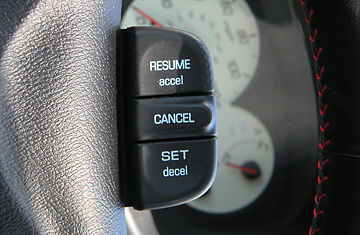
Finally, prepare before you drive. Turn off cruise control if not necessary, drive smoothly. 

Stay focused on the road not the car driving in front of you. Avoid wearing heavy boots and winter coats when you drive. There is heater on every car to keep you warm while you drive. 

Be comfortable; keep a pair of comfy shoes and lite jacket inside the car for driving purpose only. 

Plus, never forget to keep winter emergency driving kit including- windshield wiper fluid, an ice scraper, fuel line antifreeze, flashlight, shovel and so on.   

For more information visit www.prudentvaluecars.com


Wednesday, November 21, 2012

Are Touch Screens in Cars Too Distracting? Yes!


Touch screens aren’t just for laptops, smartphones and tablets.

 They have also made their way into new vehicles. Computerized controls now replace traditional buttons and knobs for heating, A/C, side windows, radio and other functions. A touch keyboard is built right into the computer screen. To touch it accurately, you have to look at it carefully  -- which is hard to do when you are trying to drive carefully.

Why are auto makers using touchscreens?
The auto makers are trying to find ways to build ever more functions into the limited space that’s available on a dashboard or centre console. Touch screens are an impressive technology; they look terrific and can display a massive amount of information.  But they shouldn’t be the only controls on a dash.

If we like touch screens on our mobile devices, what’s wrong with having them on our dashboards?
The problem has to do more with the "screen" than with the "touch." On your smartphone, you look at the screen and interact with it directly; the visual feedback is necessary for operating the interface.
When you're driving, however, you're supposed to be looking through the front window, operating most of the controls with only a quick glance. But with controls shifted to the touch screen, you have to take your eyes off the road to look at the screen.
Touch screens, unlike knobs with various shapes, don't allow that kind of “eyes on the road” operation.  Small buttons on smooth glass surfaces demand your visual attention, and that could cause an accident.

How much visual attention is needed?
It can be considerable.  For a significant part of the day, it’s hard to even see what’s on the screen, as sunlight streams in from the rear--if you’re driving west in the morning or east in the afternoon.  Finger smudges accumulate on the screen too, and make it opaque. 

Since most touch screens are very sensitive, it’s especially easy to activate a function that you don’t want. Then you have to take your eyes off the road for an even longer time just to return to where you started.

How serious is this problem?
The touch screens are so complex, and sometimes operate so poorly, that they have lowered the auto industry's overall quality score in the J.D. Power and Associates 2012 initial quality survey.  Also, touch screens are a major source of frustration for buyers of new models.

General Motors is even training customers in the use of the touch screen when they’re at the dealers and then offering help after the sale. The auto maker calls customers after a car purchase to see if they are having difficulty with the technology and may even make house calls.  Touch screens are a classic case of a “solution” looking for a problem—and creating one. 


For information about PRUDENT VALUE CARS, visit www.prudentvaluecars.com

(Source) 


Monday, November 19, 2012

Buying a Used Car? Everything You Should Know about Safety Certification and Emission Testing!

Each year, over one million used vehicles gain new owners in Ontario. While the used auto you’re about to buy may have been emission-tested and safety-certified, that doesn’t guarantee it’s in tip-top condition.

What is a Safety Standard Certificate (SSC)?

An SSC is a certificate issued by a Ministry of Transportation-approved Motor Vehicle Inspection Station (MVIS) once a vehicle has passed a safety inspection. However, this inspection covers only the minimum safety requirements for vehicles in Ontario.

Is an SSC a warranty on my vehicle purchase?

No, an SSC is not a warranty or guarantee on the general condition of the vehicle. The SSC simply means that on the date the certificate was issued, the vehicle met the minimum safety standards required under Regulation 611 of Ontario's Highway Traffic Act (HTA).

What might not be covered?

The vehicle may not be outfitted with new brakes or new tires. But even when they are, many dealers provide only the lowest cost brakes and tires with their vehicles.

Go to a dealer such as Prudent Value Cars who uses premium brakes and new  tires.  It is safer and more economical to pay a bit more and be assured that over the next two years your maintenance costs won’t amount to anymore than the price of an oil change.

What should I do?

You should take the vehicle to a certified mechanic that you trust and have that mechanic inspect the vehicle before you buy it. Also, be sure to ask the dealer if there is a warranty over a period of time --  like a  a couple of weeks or a month -- in which you can see if there are any mechanical problems. A few dealers, such as Prudent Value Cars, offer a month warranty on all mechanicals.

What about the Ontario emissions standards program, Drive Clean?

This is Ontario's mandatory vehicle emissions inspection and maintenance program. It was established because vehicles are a major source of smog and several other toxic contaminants. The e-test definitely helps protect your health. It is essential to pass before you are able to renew your registration and licence plates. You’re required to have an emissions test every two years if the vehicle is seven years or older based on the model year (Pre-1988 models are exempt.)

An emissions test is also required when buying or selling used vehicles that have a model year older than the current calendar year. This helps ensure that consumers do not end up buying a used auto with emissions problems.

The test usually includes your carburetor, spark plugs, air filter, PCV valve, fuel filter and ignition system. So, in order to pass the e-test, be very sure that your auto is well maintained.


For more information about  PRUDENT VALUE CARS,  visit our web site: www.prudentvaluecars.com
There’s a big difference between PRUDENT VALUE CARS and most other dealers.  PRUDENT goes well beyond the minimum safety standards in Ontario.  PRUDENT installs new premium-quality brakes and new all-season tires. 

Source

Wednesday, November 7, 2012

Use Cruise Control Safely When Driving Long Distance

Cruise control has improved driver comfort and convenience. When activated, the system enables a driver to automatically maintain a minimum speed of 40 km/h or faster without having to keep a foot on the accelerator. It's an easy way to control speed on the highway, making the driver less likely to go over the speed limit inadvertently. Cruise control is also useful for long trips as it often results in higher fuel efficiency and reduces driver fatigue.

When used improperly, however, cruise control can cause accidents. Here are some safety tips on when and how to use the system.


Stay Alert!  Be ready to brake. Keep your feet flat. Scan the road ahead.
 Although controlling the vehicle’s speed on cruise control allows you to take your foot off the accelerator and rest it, you still control the steering and braking. Keep both feet flat on the driver’s side floor and ready for braking or maneuvering if you have to slow down or suddenly stop. Don’t lounge or curl your foot up underneath you as you drive.

Above all, it’s important to remain alert. A false sense of security could lead to inattention and an accident. Keep your mind on your driving; scan the road ahead for traffic, obstacles, and changing road conditions.

Not on winding, icy or slippery roads.  Not in heavy traffic.
Cruise control can be dangerous when the driver can’t drive safely at a steady speed.  Also, it should not be used while on winding roads or in heavy traffic. Cruise control may also be dangerous on slippery roads. The system is designed for perfect road conditions, but on slippery surfaces it can cause the vehicle to go into a skid.

This is, of course, a special concern during the winter months, when the roads are icy. The only way to avoid a skid in this environment is to immediately reduce power. But with cruise control engaged, the wheels continue spinning and the driver may lose control of the car.


Not during heavy summer rain.  Avoid slamming on the brakes.
It's not only a winter problem. Using cruise control during a heavy summer rain can cause the car to hydroplane - a loss of control owing to a layer of water between the tires and the road. The risk is particularly high when driving across a patch of deep water.

If you begin to lose control, it's vital to remember how to react.  Avoid slamming on the brakes.  That puts the driver at even greater risk of a collision. Instead, stay calm and brake steadily, look where you wish to go and steer in that direction.

Don't use on roads where many speed adjustments are necessary.
These include winding roads, those with heavy traffic and urban and suburban streets.

Using cruise control in traffic and on city streets with lights and stop signs is an unsafe practice. You would have to reset the cruise control every time you brake and you’re not likely to be driving at the minimum speeds appropriate for it. Instead, you should manually control your car in traffic and on city streets, saving cruise control for the highway.

Turn cruise control off when not in use.
Do not simply disengage it with the brake. If you leave it on when not using cruise, you might hit a button and go into cruise inadvertently.  You could be startled and even lose control of the car.

Cruise control can make your drive more pleasurable and fuel-efficient, but you have to use it as intended.


How Better Driving Can Save You Money?

For information about PRUDENT VALUE CARS, visit our web site: www.prudentvaluecars.com

Monday, October 1, 2012

Car Washes can be very scary for young children

I recently watched a video on YouTube under “Funny car wash video kids” as key words. But after watching this, I would say that this is a must-watch video for all parents taking young children to the car wash for the first time.
We are all captivated by all the wonderful expression of children, even the silliest ones! However, what may seem funny to us may not be the case for young children.

This video showed a toddler going through a car wash. Her horrified big brown eyes as she watched the bubbles and brushes were anything but funny.  She did not know what was happening.  She felt she was being attacked.  The mother was trying her best to comfort her from the front seat but the expression on her child's face showed that she was terrified.

I believe parents should give their kids some information about what is going on and what to expect  before they bring their kids to a carwash.  It may sound silly, but after watching other videos of terrified toddlers during a car wash, parents should be forewarned about the effects on young children -- especially if they are not told about what happens.

How To Save Money On Gas By Improving Driving Skills?

Better Driving Tips to Pile Up Sizable Savings over Time


High gas prices are a constant gripe of car owners these days, with many eager to trade in their gas guzzler for a fuel-efficient model. That’s certainly not a bad idea, but even if you keep your gas guzzler, there are some easy ways – both driving techniques and maintenance -- to improve its fuel economy.  By squeezing a few extra kilometers out of every tank of gas that you use, you can pile up sizable savings over time.

Easy on the gas pedal

Don’t floor the gas pedal forcefully whenever you want to accelerate.  Every time you make an abrupt, quick or sudden movement, you’re throwing away money.  Instead, opt for a smoother driving style. Use light, smooth throttle inputs, not deep throttle blips and full-throttle moves.

Easy on the brake

Keep your eyes focused further down the road. If you spot traffic congestion ahead, don’t immediately hit the brake pedal. Instead, take your foot off the accelerator and coast until you need to brake. When you do brake, ease on the pedal and maintain as much forward motion as possible. It takes more fuel — and, therefore, money — to get a car up to speed than to maintain that speed.

Keep your cruising speed low

Wind resistance increases sharply at higher speeds, so keeping your cruising speed below 105 km/hr will make your gas dollars go further. Use cruise control on highways..

Plan Your Day Smartly

Arrange your daily errands so that you make as many stops as possible in one trip. This approach is especially important in rural areas where you may have to travel long distances to reach your destinations. In more congested environments, also consider the time of day so as to avoid stop-and-go traffic. Idling wastes fuel. 

Tune up the engine

A tune-up of your car’s engine can improve its fuel efficiency by 4 percent.  A tune-up that fixes a faulty oxygen sensor can result in an improvement of up to 40 percent. Basic maintenance can also affect fuel efficiency. Even something as ordinary as the grade of oil you use can be a big factor.  It’s always best to use the manufacturer's recommended oil.

Inflate your tires

Be sure to keep your tires properly inflated if you want to get the best fuel efficiency. Tires that are under-inflated have more drag and need more energy in order to move, Check the tire pressures once a month, because leaks and temperature changes will deflate them. An estimated 17 percent of vehicles on the road have under-inflated treads. Properly inflated tires can boost fuel efficiency by as much as 3.3 percent, plus they are safer and will last longer.

 Reduce travel weight

Be sure not to keep heavy items in the trunk of your car when you travel.  By reducing the weight by 45 kilograms, you will gain up to a 2 percent increase in fuel efficiency. Rooftop racks are a bad idea, too.  Even when they are empty, they increase wind resistance, lowering fuel efficiency by 5 percent.

Follow these tips and you will benefit from less fuel consumption no matter what kind of vehicle you drive.

For information about PRUDENT VALUE CARS, visit our web site: www.prudentvaluecars.com

Friday, September 21, 2012

How To Avoid - A School Zone Ticket ?

I read this great article about, just by staying alert how you can avoid being ticketed on school zone and also increase safety among the pedestrians on the school zone during school hours.
After the summer school break, our road conditions as well as the driving conditions change. The roads get busier with school kids and teachers as pedestrians. Also not to mention school buses and parents who are dropping thier kids at school.
So what can we do to keep our roads safe inside school zone?

• Prepare early for a longer commute-  Leave at least 10 minutes earlier, this way you will stay stress free when driving.

• Stay Alert! Yes, keep your eyes open for children walking on the street as they can be very unpredictable. Many kids tend to wear ear-phones or text as they walk. Some kids are very irresponsible and do not even look when they are crossing the road. It’s also our responsibility as drivers to stay alert while driving for any unexpected occurence of any pedestrians. 

• Be patient- well, this is a tricky one to follow. However, make sure you have enough time and well-prepared.

• Use extra care while driving on school zone- watch for cyclists, novice drivers.

• Be prepared what to do when encountering a school bus. Refer to section 175 of the highway act as not following specific guideline may incorporate severe penalties.
            
For more safety tips and advice please visit prudentvaluecars.com

Source: wheels.ca